
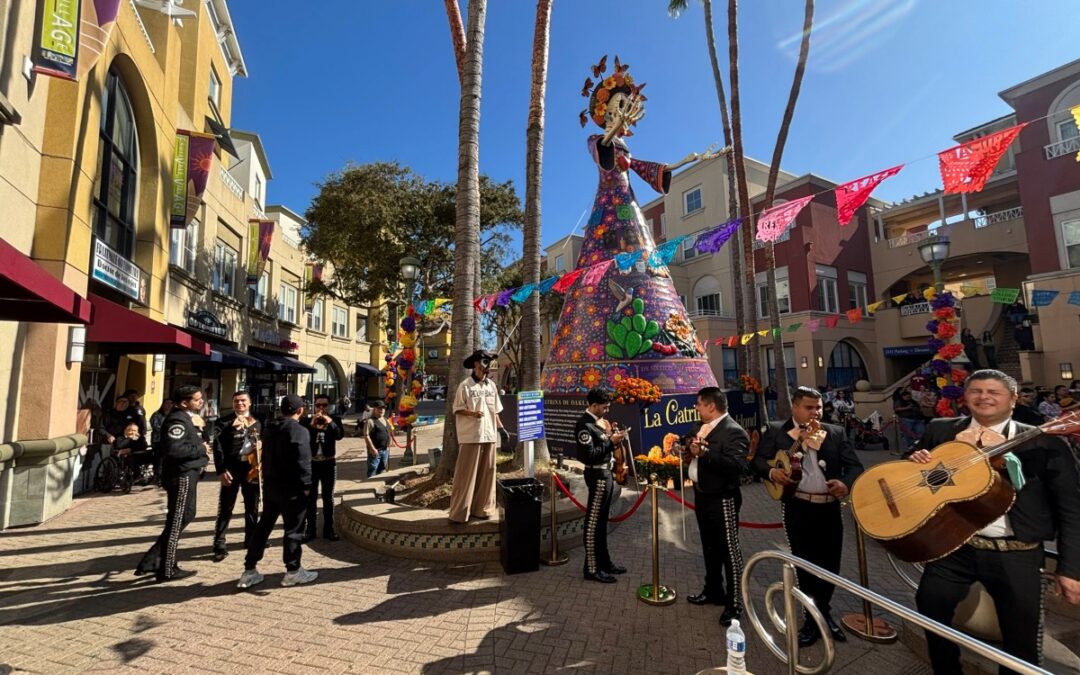
On a sunny October day in Oakland, hundreds of attendees gathered to welcome La Catrina, a 34-foot sculpture handcrafted in Mexico City, to her new home in Fruitvale Village. Speakers at the ceremony noted that La Catrina’s 2,000‑mile journey reflects the migrant experience shared by many who call Oakland and the East Bay home. The statue is also a symbol of perseverance in the face of a national narrative that continues to single out migrants living in our region and across the U.S.
At a time when the federal and state governments are at odds over immigration enforcement, local representatives are pushing back against the prevailing narrative and bringing community voices to the table. From the approval of ICE Free Zones in Alameda County to the Contra Costa Truth Act Forum, the East Bay continues to bring together elected officials, community representatives, and law enforcement to address new challenges facing our residents.
But the Latino story in the East Bay is about more than just immigration. It builds on a deep legacy of civic engagement, advocacy for quality education, and entrepreneurship. This year, the Oakland Latino Chamber of Commerce and the California Hispanic Chambers of Commerce brought the annual Statewide Convention & Expo, the largest gathering of Hispanic and diverse small businesses and community leaders in the Western region, to Oakland with over 1,250 attendees. In May, East Bay EDA had the privilege of working with the Consulate General of Mexico to bring the Gourmex festival to the East Bay, highlighting Mexican culinary excellence and entrepreneurs from across the Bay Area.
Business support across our region also remains strong. A 2025 study published by UCLA recognized Fruitvale for its local economic development efforts, including neighborhood coalitions and CBOs’ response to the COVID-19 pandemic. Oakland is also home to the Immigrant Micro-Business Support Program, a collaboration with the City’s Economic and Workforce Development Department, The Unity Council, and Feed the Hunger Fund, which provides technical assistance and wraparound support for small businesses. The Alameda County, Contra Costa County, Oakland, and Richmond Workforce Development Boards are also providing year-round programs for youth, job seekers, and employers.
In higher education, the Contra Costa Community College District is now made up of nearly half Latino students, with credit to leaders like Trustee John Marquez and programs like Puente at DVC. The Peralta Community College District also remains committed to the success of Latinx students, as evidenced by its annual Raíces Peralta Latinx Graduation and related programs. In Alameda County, programs like Oakland Promise and Hayward Promise Neighborhoods at Cal State East Bay are advancing educational success by fostering connections among students, their families, and underserved communities.
On the philanthropic side, the East Bay Community Foundation, the San Francisco Foundation, and the Latino Community Foundation are investing in local entrepreneurship, arts, housing, and legal protections for Latinx and immigrant communities through programs such as Stand Together Bay Area, which has partnerships in Alameda and Contra Costa counties and throughout the nine-county region.
In 2024, the U.S. Latino GDP became the fourth-largest in the world at $4.4 trillion. This economic impact is evident throughout California and across the Bay Area. As Hispanic and Latinx Heritage Month comes to a close, it’s important to celebrate the rich culture and traditions of our communities while also uplifting the programs and organizations that keep our neighbors safe and support pathways to opportunity.