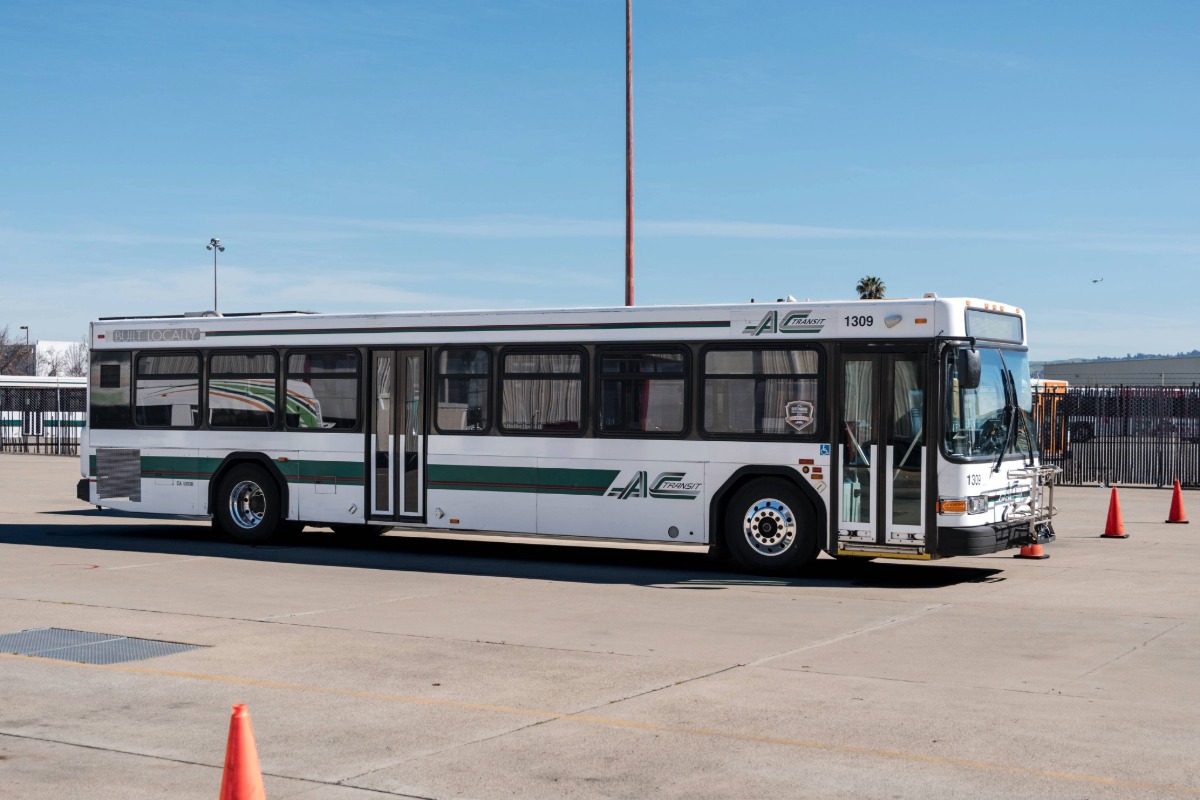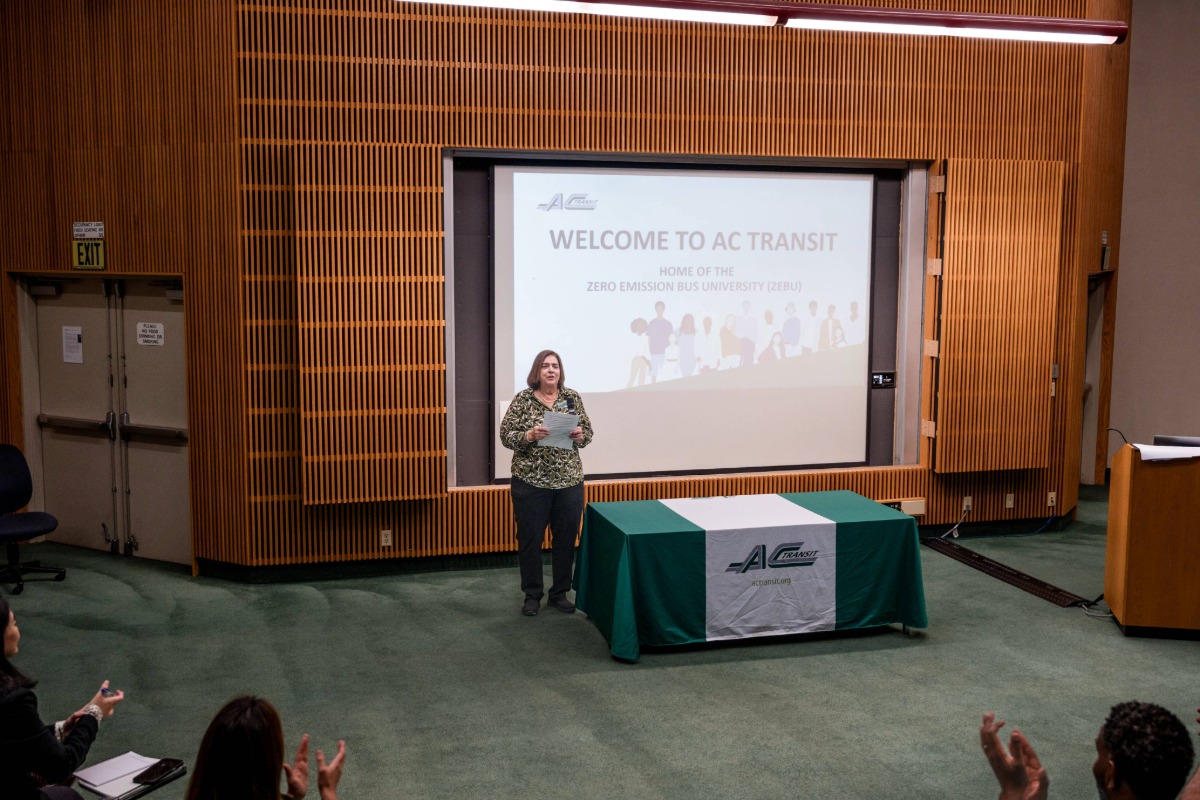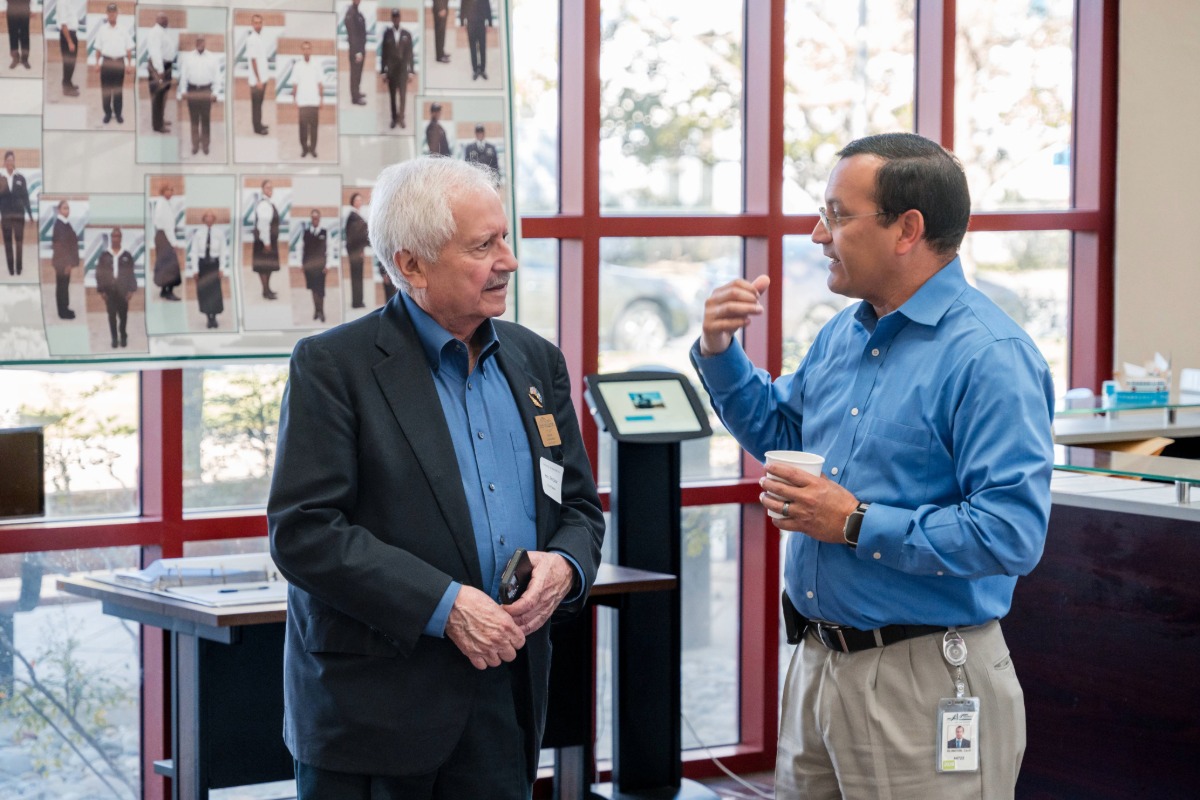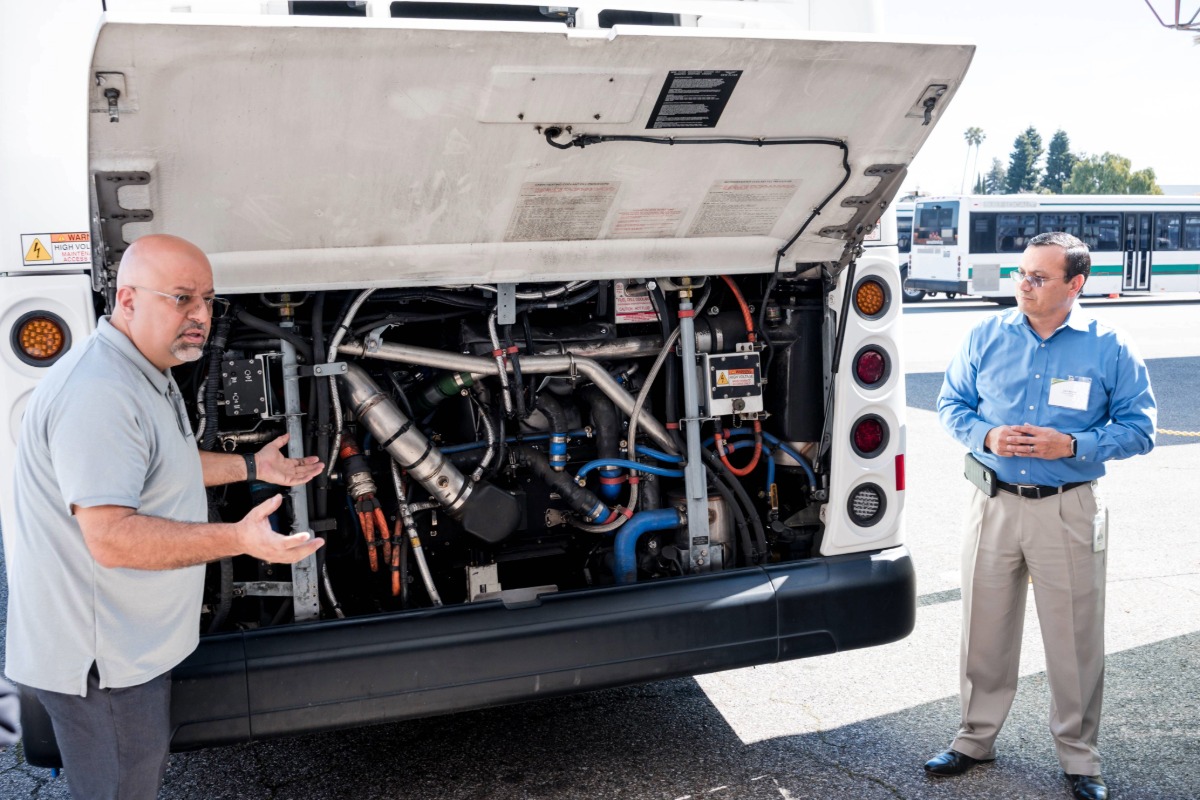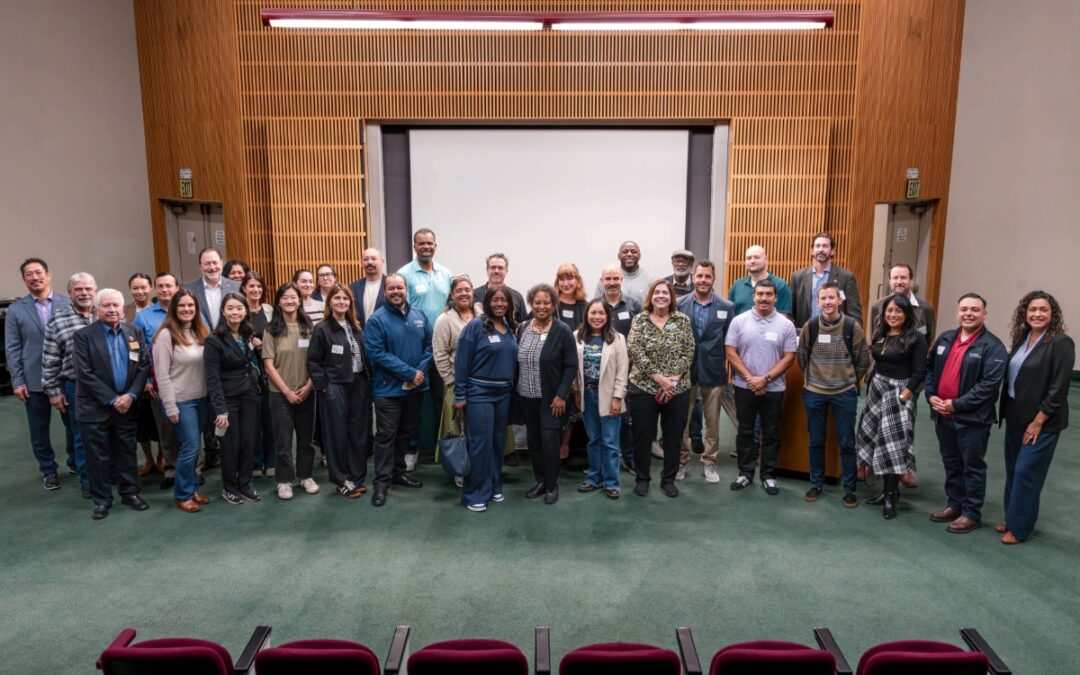
More than 30 East Bay EDA members and partners came together on February 27, 2026, for a tour of AC Transit’s award-winning Zero Emission Bus University (ZEBU) in Hayward. The morning began with welcoming remarks from Board President Diane Shaw and members of the AC Transit leadership team. Serving the East Bay since 1960, AC Transit is the largest public bus-only system in California and the third largest such transit agency in the United States. It has a service area of more than 360 square miles spanning thirteen (13) cities and eight (8) unincorporated communities in Alameda and Contra Costa counties. The transit agency employs more than 2,200 people and has an annual operating budget of just over $600 million.
Shaping the Future of Transportation Workforce Development
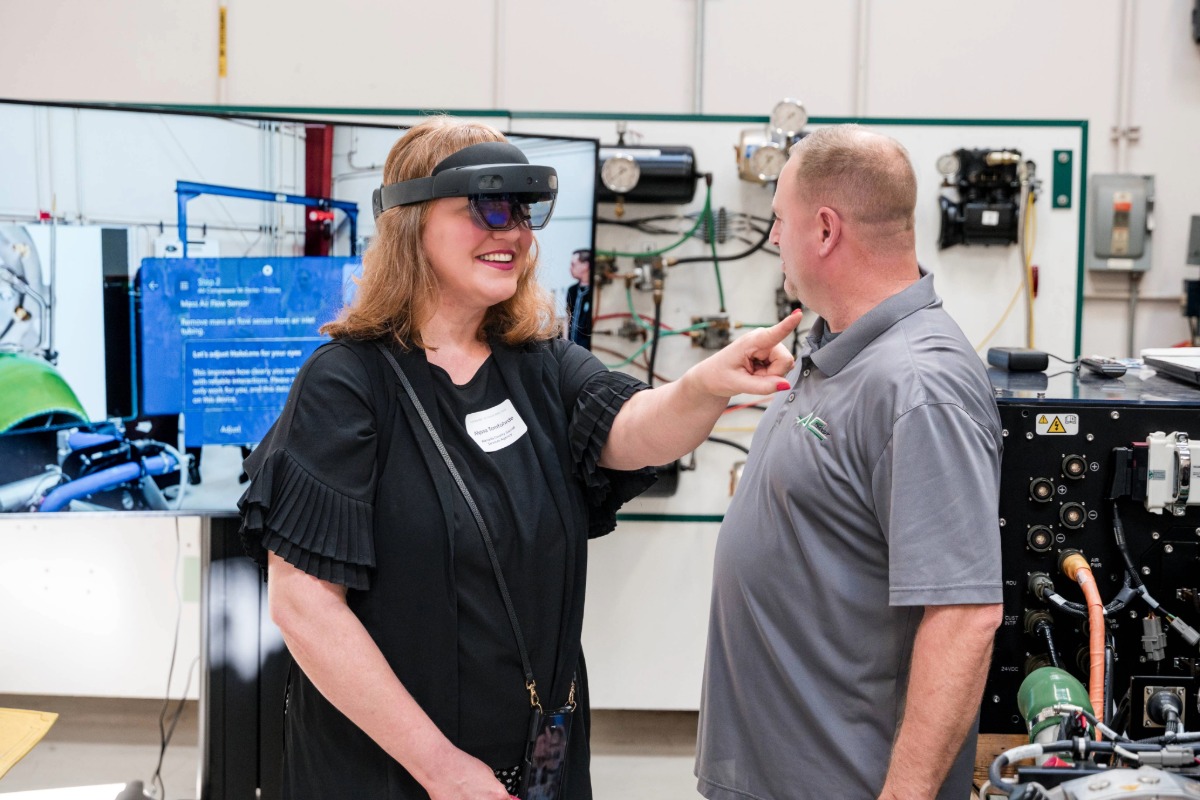
Built on a state-of-the-art training campus, AC Transit’s Zero Emission Bus University (ZEBU) integrates zero-emission technology with augmented reality to create an immersive learning environment. This cutting-edge approach ensures that tomorrow’s mechanics are equipped to safely and confidently maintain high-voltage systems and advanced electric bus technologies. ZEBU is redefining how AC Transit is preparing the next generation of transportation professionals, using virtual reality simulations to train employees so that they are equipped and prepared to maintain the transit system’s fleet.
This model apprenticeship program goes well beyond providing vocational training—it pioneers an academic pathway through a first-of-its-kind partnership between AC Transit, Amalgamated Transit Union Local 192, and the Chabot–Las Positas Community College District. Through this collaboration, AC Transit Maintenance Trainers serve as instructors of record, enabling apprentices to earn up to 50% of the credits required for an Associate of Science degree. This dual focus on technical mastery and academic achievement empowers apprentices to advance their careers while driving the future of sustainable transit.
Planning for the Future
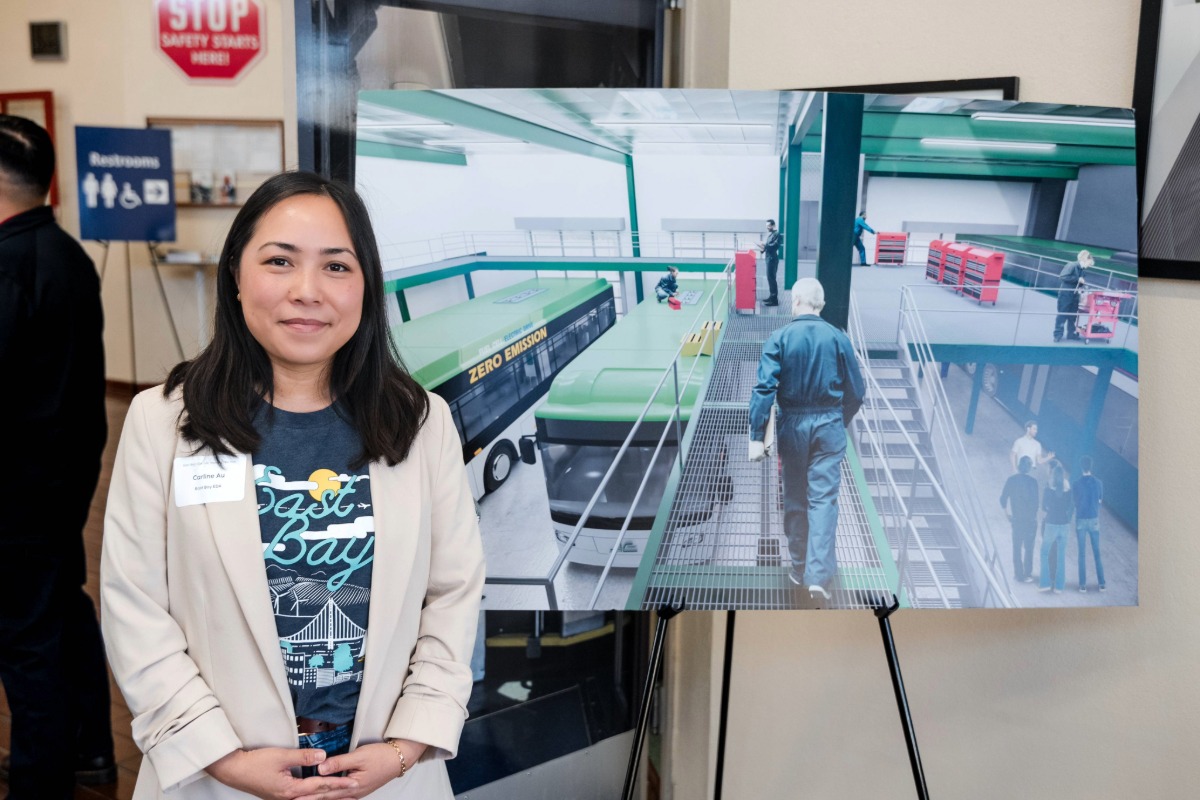
With AC Transit and other Bay Area public transportation operators facing challenging budgetary times, it is more important than ever that they continue to innovate in all aspects of their work. Overall ridership has recovered to 75% of pre-pandemic levels, although Transbay Service ridership remains slightly below half of what it was in 2020. The agency projects deficits in upcoming fiscal years due to several factors, including the exhaustion of emergency federal and state funding, flat regional sales tax revenues, and slower growth in fare revenue. AC Transit has realized more than $9 million in operational savings through various approaches, including limiting hiring to essential positions and negotiating better pricing for contracted transportation services. Despite these challenges, AC Transit continues to invest in developing its talent pipeline. One of the more visible ways this will happen is through upcoming modernization efforts of the ZEBU training facility, which will start in summer 2026, with a full reopening of the site anticipated in a few years.